
Sales
Repeat business starts after the invoice
Most businesses go quiet once they are paid. That is when the next job should be planned, with a date on the customer, not a vague hope you will remember them.
6 min read
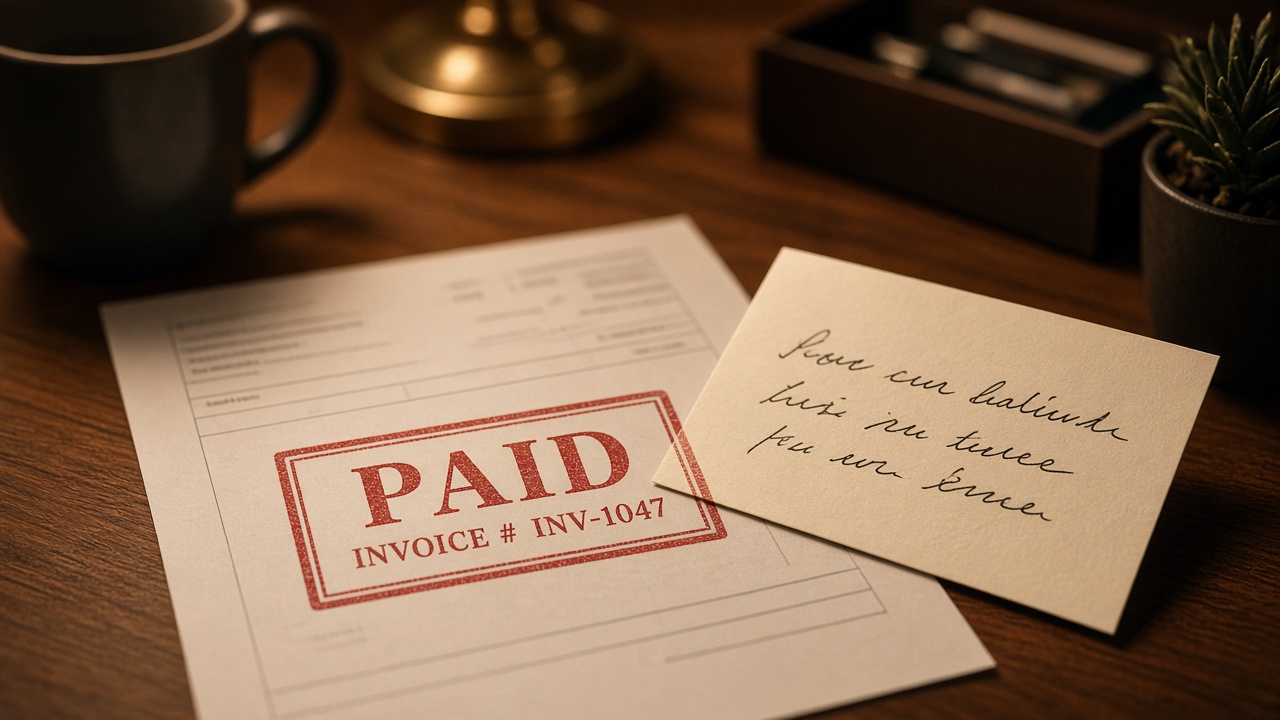
Winning the job is visible. Asking for the next one is optional, so it gets skipped. A paid invoice should create a follow-up, not a full stop. The customer already knows you. That is the cheapest conversation you will have all year.
Silence after payment trains them to shop again when the next need appears. You paid for the relationship. Then you abandoned it at the receipt.
Silence after payment trains them to shop again when the next need appears. You paid for the relationship. Then you abandoned it at the receipt.
Repeat customers are sitting on the records you already have. New strangers are more expensive. A dated task on a paid invoice is the cheapest conversation you will have all year.
If last month's paid invoices have no next date, you do not have a repeat-business system. You have hope.
Put a date on later
Service in six months, seasonal work, a second site. If you know it, task it. If you do not, set a check-in anyway. 'They know where we are' is not a plan. People are busy. They will ring the next ad they see.
The date can be rough. A task in March for last spring's irrigation job is enough. No date is how March passes with nothing.
Use the job they already know
Follow-up is easier when you refer to the last visit or invoice, not a cold 'just checking in'. 'The gutters we did in April, worth a look before storm season' is a reason to pick up. 'Hope you're well' is a reason to ignore.
That reference is only possible if the last job is on the record, not in a box of invoices.
- ✓What you did last
- ✓What usually comes next for this kind of work
- ✓When to ask, dated on the customer
“We used to think repeat work just happened if you did a good job. Some of it does. A lot more happens if you ring before they have a problem, using the last invoice as the opener. Paid is when we now set the next task, not when we close the folder.”
Make it a habit, not a campaign
A campaign can help. A task on each completed job will do more for a small team. Campaigns are broad. A dated task is specific: this customer, this reason, this week.
If you only remember repeat work when you 'do a mailout', you will miss the ones who needed a call last Tuesday.
What to say without sounding hungry
Be useful. Remind them of timing, maintenance, or the second thing they mentioned on site. Offer a booking window. Do not apologise for ringing. You did the work. You are allowed to offer the next piece.
If they are not ready, put a later date on. That is still a win. You stayed the system of record for the relationship.
Paid is not finished
Close the invoice, open the next step. If your process ends at payment, your growth depends on new strangers forever. Repeat customers are sitting on the records you already have.
Put a date on later, even a rough one
Service in six months, seasonal work, a second site. If you know it, task it. If you do not, set a check-in anyway. They know where we are is not a plan. People are busy. They will ring the next ad they see.
The date can be rough. A task in March for last spring's irrigation job is enough. No date is how March passes with nothing.
Set the task when you mark paid, not in a later mood. Later moods do not arrive.
Refer to the job they already know
Follow-up is easier when you refer to the last visit or invoice, not a cold just checking in. The gutters we did in April, worth a look before storm season, is a reason to pick up. Hope you are well is a reason to ignore.
That reference is only possible if the last job is on the record, not in a box of invoices.
Be useful. Remind them of timing, maintenance, or the second thing they mentioned on site. Offer a booking window. Do not apologise for ringing. You did the work. You are allowed to offer the next piece.
- ✓What you did last
- ✓What usually comes next for this kind of work
- ✓When to ask, dated on the customer
A habit beats a mailout
A campaign can help. A task on each completed job will do more for a small team. Campaigns are broad. A dated task is specific: this customer, this reason, this week.
If you only remember repeat work when you do a mailout, you will miss the ones who needed a call last Tuesday.
If they are not ready, put a later date on. That is still a win. You stayed the system of record for the relationship.
Payment should open the next job
Close the invoice, open the next step. If your process ends at payment, your growth depends on new strangers forever.
Look at last month's paid invoices this week. How many have a next date? That number is your repeat-business system. If it is near zero, you do not have one yet.
Set the next task when you mark paid
The moment of payment is when you still remember the job. Six weeks later you will not. Put the date on while the invoice is in front of you.
Rough is fine. March for a spring job. November for storm season. No date is how the season passes.
Use their words from the site
They mentioned a second site, a tenant, a later stage. That sentence is the opener. Write it on the customer when you hear it, then use it when you ring.
Just checking in wastes the cheapest conversation you have. The last job is the reason you are allowed to call.
Foxtra keeps the customer after the invoice so repeat work is a task, not a memory. When you mark paid, put the next date on the same record, in language that refers to the job they already know.
When you mark paid, put the next date on the same record, in language that refers to the job they already know.
A dated task on the customer beats hoping they will remember you. Repeat work is a process, not a compliment you wait for.
Paid is not finished. Close the invoice, open the next step, and talk about the work they already know.