
Communications
Keep SMS on the customer timeline
Texts from a personal phone never make it into the job history. The next person cannot see what was promised, and the business cannot repeat the conversation.
7 min read
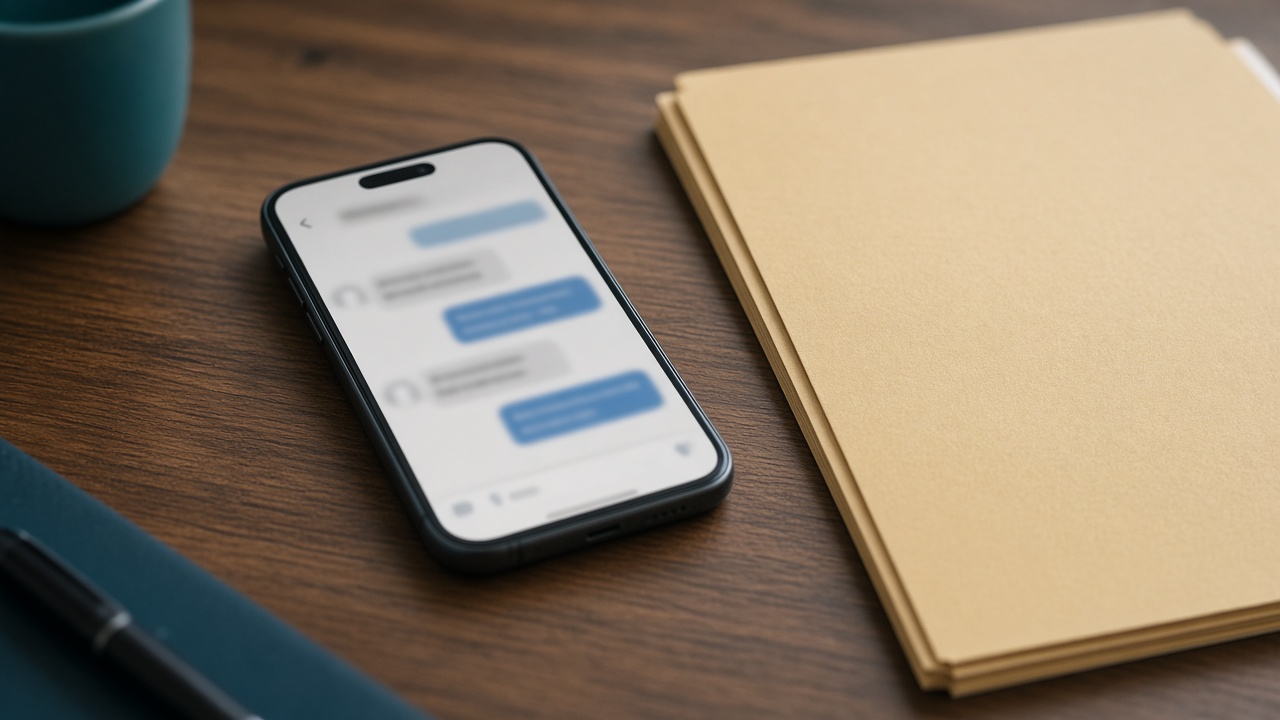
SMS is fast, which is why teams use it. It is also easy to lose. If the only copy is on a handset, the business does not have a record. When that phone is left at home, upgraded, or full, the promises go with it.
Customers treat a text as official. Your office should be able to see the same words.
Customers treat a text as official. Your office should be able to see the same words. If the only copy is on a handset, the business does not have a record. It has a dependency on a battery and a pocket.
SMS is the right tool for times, gates, and 'on our way'. It is a poor tool for long scope debates. Either way, if it is about the job, it has to be findable later.
If a promise in a text contradicted the calendar this month, you already know the cost. The fix is visibility, not a longer text.
Promises live in short messages
'We'll be there after 2' is a commitment. If it is not on the contact, the office will contradict it. The customer will believe the text. Your receptionist will believe the calendar. That gap is how trust breaks on a Tuesday afternoon.
The same is true for 'invoice is on the way', 'use the side gate', and 'we'll knock 10% off if you book this week'. Short does not mean unofficial.
Send from the record when you can
A CRM SMS is not about being fancy. It is about the message sitting with the job, the booking and the quote. Who sent it, when it went, and what was said should be obvious to the next person on the desk.
If you must send from a phone in the field, log the outcome on the record before the next job. 'Told them 2pm, side access' is enough.
- ✓Who sent it
- ✓When it went
- ✓What was said
- ✓Whether they replied, and what they asked
“A tech promised a window on his own phone. The office booked someone else into that hour. The customer had the text. We had a mess. SMS on the timeline sounds like admin. It is how you stop standing on each other's commitments.”
Do not mix work and personal threads
Personal phones get left at home, changed, or full. Work messages should not depend on that. They also should not sit next to family chats where a number is easy to mis-tap.
Customers should have one number that reaches the business, with the conversation visible to the people who need it.
What belongs in a text
Times, gates, 'on our way', invoice links, booking confirms. Not long scope debates. If the thread is turning into a quote negotiation, move it to a call and put the outcome on the record.
SMS is a sharp tool. Use it for the facts that need to travel quickly, then make sure those facts are stored.
If it is about the job, log it
A text without a record is a conversation the business cannot repeat. The leave test applies here too. If only one person's phone knows the promise, you do not have a process. You have a dependency.
Short messages are still commitments
'We will be there after 2' is a commitment. If it is not on the contact, the office will contradict it. The customer will believe the text. Your receptionist will believe the calendar. That gap is how trust breaks on a Tuesday afternoon.
The same is true for 'invoice is on the way', 'use the side gate', and 'we will knock 10% off if you book this week'. Short does not mean unofficial.
When two staff make two promises, the timeline is how you see the collision before the customer does.
Send from the record, or log the outcome
A CRM SMS is not about being fancy. It is about the message sitting with the job, the booking, and the quote. Who sent it, when it went, and what was said should be obvious to the next person on the desk.
If you must send from a phone in the field, log the outcome on the record before the next job. 'Told them 2pm, side access' is enough.
Replies matter too. If they ask to move the window, that is a booking change, not a chat you will remember at the depot.
- ✓Who sent it
- ✓When it went
- ✓What was said
- ✓Whether they replied, and what they asked
Keep work off personal threads
Personal phones get left at home, changed, or full. Work messages should not depend on that. They also should not sit next to family chats where a number is easy to mis-tap.
Customers should have one number that reaches the business, with the conversation visible to the people who need it.
If staff have been using their own mobiles for years, do not shame them. Give them a way to log the promise in twenty seconds. Then move sending onto the record as the default.
Keep texts short and stored
Times, gates, on our way, invoice links, booking confirms. Not long scope debates. If the thread is turning into a quote negotiation, move it to a call and put the outcome on the record.
SMS is a sharp tool. Use it for the facts that need to travel quickly, then make sure those facts are stored.
The leave test applies here too. If only one person's phone knows the promise, you do not have a process. You have a dependency.
One business number
Customers should not have to guess which mobile to use. One number that reaches the business, with the thread visible inside, stops the 'I texted Dave' problem when Dave is on leave.
If you are not there yet, log the promise anyway. Visibility can start as a sentence on the record while you move sending across.
Templates for the facts, not the chat
On our way, running late, gate code, invoice link. Those can be starters. Do not template a negotiation. Call, then write the outcome.
A starter that includes the live time from the booking is useful. A starter that says 'your appointment' with no time is noise.
Foxtra keeps SMS with the rest of the customer activity so the office and the field are reading the same story. Fast messages still count. They just should not live only on a handset.
Fast messages still count. They just should not live only on a handset. Send from the customer when you can, and write it down when you cannot.
If the office and the field are standing on each other's commitments, start with SMS on the timeline. The calendar and the quote will make more sense once the texts are visible.
Texts are official to the customer. Make them official to the office as well. Same words, same record.